 At a recent gathering in downtown Austin, the breakfast fare said it all. Organic yogurt, locally produced honey, fresh breakfast tacos broke from the usual offerings of croissants and Danish pastries. This crowd was invested in their food, mostly emotionally, some economically, as farmers, chefs, city planners, food activists, non-profits, and individuals gathered to learn about the possibility of a public food market in Austin.
Austin has farmers markets but no public market, yet. And even the Read more [...]
At a recent gathering in downtown Austin, the breakfast fare said it all. Organic yogurt, locally produced honey, fresh breakfast tacos broke from the usual offerings of croissants and Danish pastries. This crowd was invested in their food, mostly emotionally, some economically, as farmers, chefs, city planners, food activists, non-profits, and individuals gathered to learn about the possibility of a public food market in Austin.
Austin has farmers markets but no public market, yet. And even the Read more [...] Make Way for Food Markets?
1
At a recent gathering in downtown Austin, the breakfast fare said it all. Organic yogurt, locally produced honey, fresh breakfast tacos broke from the usual offerings of croissants and Danish pastries. This crowd was invested in their food, mostly emotionally, some economically, as farmers, chefs, city planners, food activists, non-profits, and individuals gathered to learn about the possibility of a public food market in Austin.
Austin has farmers markets but no public market, yet. And even the Read more [...]  Michael Pollan recently spoke to a packed house here in Austin, Texas. The audience included members of “The Food Movement,” as Pollan called them, as well as his many loyal readers. His message was simple, direct, and eloquent. Eat simply, know where your food comes from and ….. beware of capitalism.
Six years ago, I attended a talk by Mr. Pollan in a small Cambridge, MA bookstore when his now award-winning book came out, The Omnivore’s Dilemma. The audience was about a tenth of the size
Michael Pollan recently spoke to a packed house here in Austin, Texas. The audience included members of “The Food Movement,” as Pollan called them, as well as his many loyal readers. His message was simple, direct, and eloquent. Eat simply, know where your food comes from and ….. beware of capitalism.
Six years ago, I attended a talk by Mr. Pollan in a small Cambridge, MA bookstore when his now award-winning book came out, The Omnivore’s Dilemma. The audience was about a tenth of the size 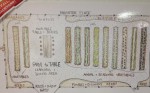 Texas peaches will soon disappear from the Hill Country roadside stands, removing star performers on local restaurant menus such as Peach Melba. Named after an Australian opera singer, Peach Melba was the invention of Auguste Escoffier, a nineteenth century entrepreneur who introduced the ice cream and peach dessert to the Paris Ritz. Demonstrating his creative culinary imagination, he convinced farmers in the Rhone Valley to grow thin-stalked, green asparagus for the British who paled at the white,
 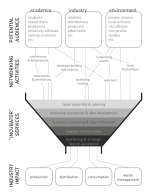 The Food Lab (TFL) is based in the Center for Sustainable Development (CSD) of the School of Architecture (SOA) of the University of Texas at Austin (UT). The Food Lab provides undergraduate awareness of food issues, encourages and motivates students to engage with innovative food systems research, and provides support to startups that leverage University research.
The Lab is a catalyst for scientific and cultural experimentation and innovation in the food system. We encourage the research community
The Food Lab (TFL) is based in the Center for Sustainable Development (CSD) of the School of Architecture (SOA) of the University of Texas at Austin (UT). The Food Lab provides undergraduate awareness of food issues, encourages and motivates students to engage with innovative food systems research, and provides support to startups that leverage University research.
The Lab is a catalyst for scientific and cultural experimentation and innovation in the food system. We encourage the research community  Austin is bursting with enthusiasm for food. Even better, our city fosters innovative startups that add to the richness and experience of the food scene.
Foodies, food trucks, and fans of food in general have thrived and grown over the last twenty years, driven by the mix of musicians, college students, and artists seeking cheap and delicious food. Thus the food truck phenomena hit Austin first, giving our city a reputation for being a scrappy player in the food scene.
The recent surge of interest
Austin is bursting with enthusiasm for food. Even better, our city fosters innovative startups that add to the richness and experience of the food scene.
Foodies, food trucks, and fans of food in general have thrived and grown over the last twenty years, driven by the mix of musicians, college students, and artists seeking cheap and delicious food. Thus the food truck phenomena hit Austin first, giving our city a reputation for being a scrappy player in the food scene.
The recent surge of interest 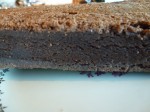 “No cakey-ass brownies here,” declares Miles Compton about his baked chocolate dessert. In a food culture that insists on knowing the farmer who grows its corn and the exact percentage of butterfat in a cookie, how is it that Miles is so successful with his somehow unknowable chocolate dessert?
Long-time Austin food columnist, the late Katie Crider said that Mile’s dessert is “anything you want it to be.” And she was right. Virginia Wood, another Austin food writer said the dessert was
“No cakey-ass brownies here,” declares Miles Compton about his baked chocolate dessert. In a food culture that insists on knowing the farmer who grows its corn and the exact percentage of butterfat in a cookie, how is it that Miles is so successful with his somehow unknowable chocolate dessert?
Long-time Austin food columnist, the late Katie Crider said that Mile’s dessert is “anything you want it to be.” And she was right. Virginia Wood, another Austin food writer said the dessert was 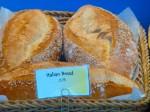 While pondering the nature of our food system, I find parts of it in places that seem unrelated, at first. A bakery in Austin may seem connected to the system through the production of bread, the loaves and croissants traveling from the baker’s commercial kitchen into the hands and mouths of hungry Austinians every morning. But the system engages other less apparent components of the system, like dairy companies, flour manufacturers, and truck drivers. A recent visit to the bakery shed light on
 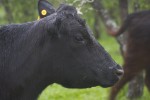 Mary-Rose and Lefty Fisher’s farm, Rancho benedicion de Dios (translated Blessing of God Ranch), was awash in a much-needed rainstorm last week. Texan’s don’t mind the inconvenience of flooded streets when rain brings a break in the Texas drought. And on the day that I visited Mary-Rose in March, her pastures were green and the Black Angus cattle stood out, rivulets of water trickling down their big steamy bodies. As bovines are wont to do, they were ruminating after pulling at the green grass
 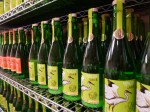 Yoed Anis makes sake in Texas. Born in Israel, but a self-proclaimed Texan, Yoed began his enterprise, Texas Sake Company, in the fall of 2011, propelled by his love of brewing beer and an attraction to a natural connection between the historical tradition of rice growing in Texas and the potential of brewing sake. Immigrants such as Yoed and Texas rice, the medium-grain variety used to make sake, both have long histories in Texas foodways.
From the late 19th century, Texas has been growing rice,
Yoed Anis makes sake in Texas. Born in Israel, but a self-proclaimed Texan, Yoed began his enterprise, Texas Sake Company, in the fall of 2011, propelled by his love of brewing beer and an attraction to a natural connection between the historical tradition of rice growing in Texas and the potential of brewing sake. Immigrants such as Yoed and Texas rice, the medium-grain variety used to make sake, both have long histories in Texas foodways.
From the late 19th century, Texas has been growing rice, 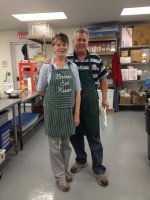 A few weeks ago, my family challenged me to become a vegan for a week. For an enthusiastic omnivore, a week of what I viewed as deprivation was indeed challenging. As the days passed, I moved from curiosity to resentment to anger and then finally, acceptance. Two unexpected epiphanies came out of this experience. The first was that veganism can feel single-dimensional, like listening to an a cappella group instead of a symphony orchestra. Without meat, or at least dairy products, vegan diets feel